Paul Ludwig · 9 October 2026
How Felora's School Partnerships Are Building Student-Led Databases of Climate-Resilient Italian Flora
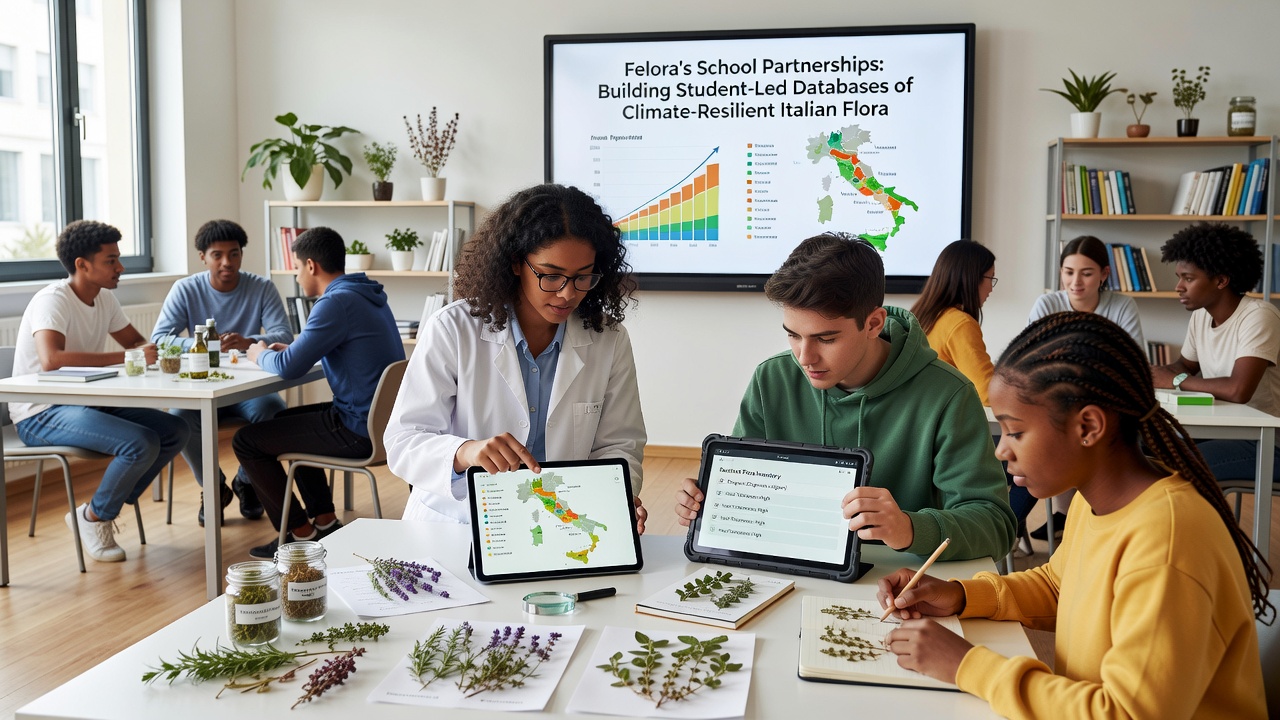
Italian secondary schools have formed structured partnerships with Felora that place students at the center of data collection efforts focused on native plants showing resilience to shifting temperature and precipitation patterns. These collaborations began expanding in 2024 and now operate in multiple regions including Lombardy, Emilia-Romagna and Sicily, where participants record species traits, habitat conditions and observed changes over time.
Partnership Structure and Regional Reach
Each participating school receives training materials, field equipment and access to a shared digital platform developed by Felora in coordination with regional education authorities. Teachers integrate the work into existing biology and environmental science curricula, while Felora staff provide monthly virtual sessions that review data quality standards and introduce new identification protocols. In October 2026 the network added three new schools in the Apennines, bringing the total number of active student teams to twenty-seven across eight Italian regions.
Student Data Collection Methods
Students follow standardized observation sheets that capture leaf morphology, flowering timing, soil moisture readings and herbivore pressure for each target species. Teams upload photographs and GPS coordinates through a mobile application that automatically tags entries with weather data from nearby meteorological stations. Cross-verification occurs when neighboring schools visit the same sites during different weeks, allowing inconsistencies to surface and get resolved before entries enter the permanent archive. The process emphasizes repeated measurements at fixed plots rather than one-time surveys, which builds longitudinal records suitable for trend analysis.
One study coordinated by the University of Florence showed that student-collected datasets on drought-tolerant species such as Quercus ilex and Arbutus unedo matched professional field measurements at a rate above 85 percent when protocols were followed consistently. These findings appear in the university's open research repository and have been referenced by the European Environment Agency in its 2025 biodiversity assessment for the Mediterranean basin.
Database Architecture and Species Focus
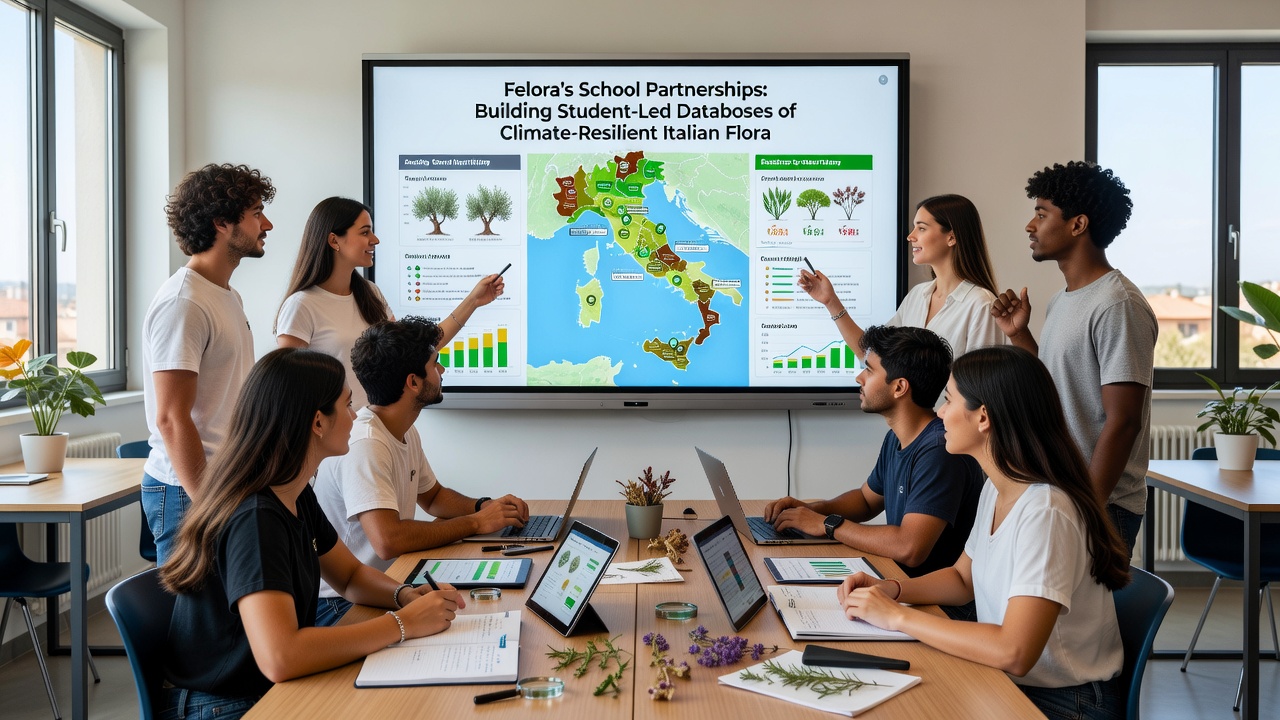
The central database organizes entries by taxonomic family, altitudinal range and projected climate suitability scores derived from regional climate models. Students contribute raw observations while Felora researchers apply quality filters and add modeled projections that estimate how each species range may shift by 2050 under different emissions scenarios. Species currently prioritized include those already showing northward expansion such as Laurus nobilis and those persisting in increasingly arid southern zones such as Cistus monspeliensis. The system also flags plants with cultural or economic importance so that data can support both conservation planning and local agricultural adaptation strategies.
Technology Tools and Quality Assurance
Participating classes use tablets equipped with offline mapping applications that sync once network connectivity returns. Automated scripts flag duplicate entries and highlight records missing required fields, prompting teams to revisit sites when necessary. Felora maintains an open API that allows external researchers to query aggregated datasets without exposing individual student locations or contact details. Regular workshops held every quarter introduce updates to the species list and calibration procedures for new sensor models distributed to schools.
Integration with Broader European Initiatives
Student datasets feed into larger monitoring frameworks coordinated by Italian regional environmental agencies and contribute to reporting requirements under the EU Nature Restoration Regulation. In 2026 several schools began aligning their protocols with the Italian National Biodiversity Strategy, which requests citizen-science inputs for updating species distribution maps. This alignment allows student records to appear in official submissions to the European Commission while maintaining clear attribution to the originating school teams.
Conclusion
The school partnerships continue to expand the geographic coverage and temporal depth of records on Italian flora capable of withstanding climate pressures. Through consistent field protocols, shared digital tools and connections to national and European reporting systems, student contributions now form a recognized component of ongoing botanical monitoring efforts. The databases remain openly accessible for research and educational purposes, supporting further analysis of species responses across Italy's varied ecosystems.