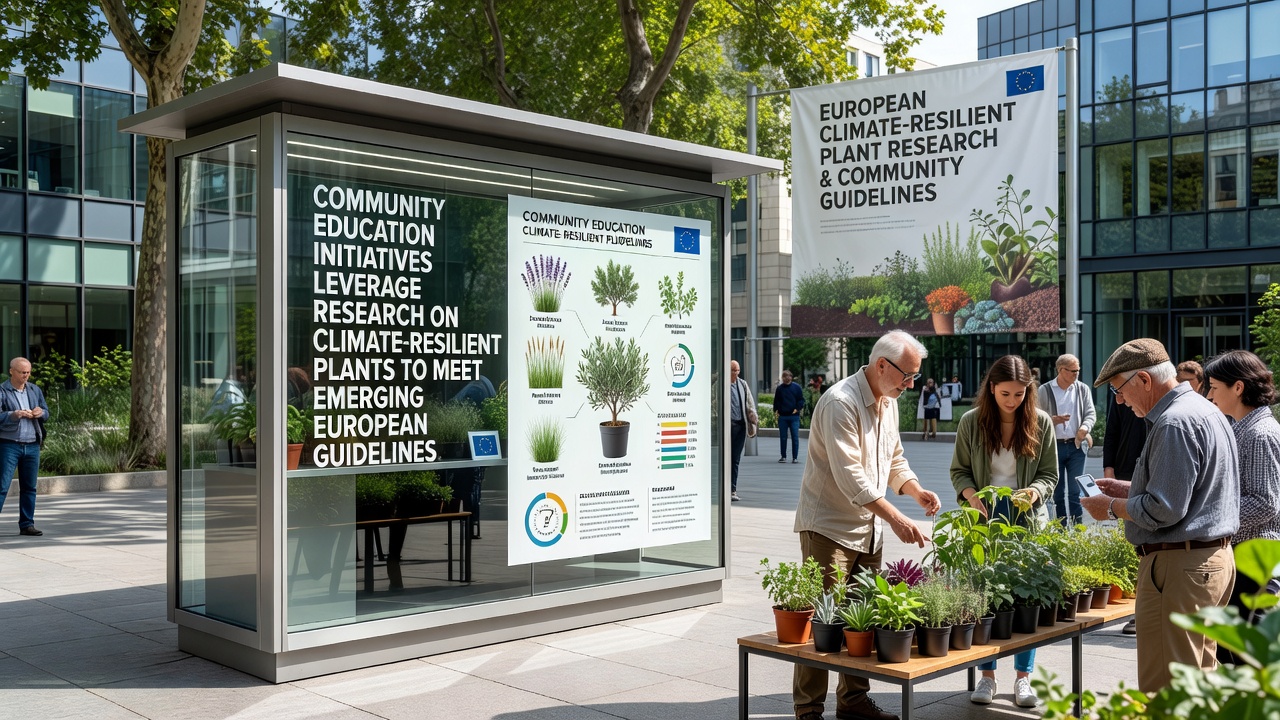
Avery Foster · 25 September 2026
Community Education Initiatives Leverage Research on Climate-Resilient Plants to Meet Emerging European Guidelines
Researchers across multiple institutions have documented how specific plant varieties withstand temperature fluctuations and water scarcity, while community education programs now integrate these findings into curricula designed to align with upcoming European environmental standards. Data from field trials in southern Europe show that species such as certain Mediterranean shrubs and deep-rooted grasses maintain productivity under reduced rainfall scenarios projected through 2030, and education initiatives translate these results into practical training modules for local farmers and gardeners.
European policymakers have outlined new guidelines that emphasize biodiversity corridors and reduced irrigation demands in urban and rural planning documents scheduled for phased implementation beginning in September 2026. These measures require member states to demonstrate measurable adoption of climate-adapted vegetation in public spaces and agricultural zones, prompting regional authorities to partner with botanical research centers for verified plant selections.
Research Foundations Supporting Plant Selection
Long-term studies conducted by teams at Mediterranean agricultural stations have identified genetic traits linked to heat tolerance and soil stabilization, with results published in peer-reviewed journals that list quantitative survival rates under controlled drought conditions. Observers note that these datasets now feed directly into community workshops where participants learn identification techniques and propagation methods for the same species, creating a direct pipeline from laboratory records to field application.
One program operating in northern Italy coordinates with university greenhouses to distribute starter plants alongside printed guides that cite trial outcomes on root depth and evapotranspiration rates. Participants track growth metrics over multiple seasons, and aggregated records contribute back to the same research repositories that originally supplied the recommendations.
Integration with Emerging Regulatory Frameworks
Guidelines from the European Commission on sustainable land use include targets for native and resilient species coverage in municipal landscapes, with reporting requirements that begin in late 2026. Education coordinators have responded by embedding regulatory checklists into lesson plans, allowing participants to map local plantings against compliance criteria without requiring separate administrative training.
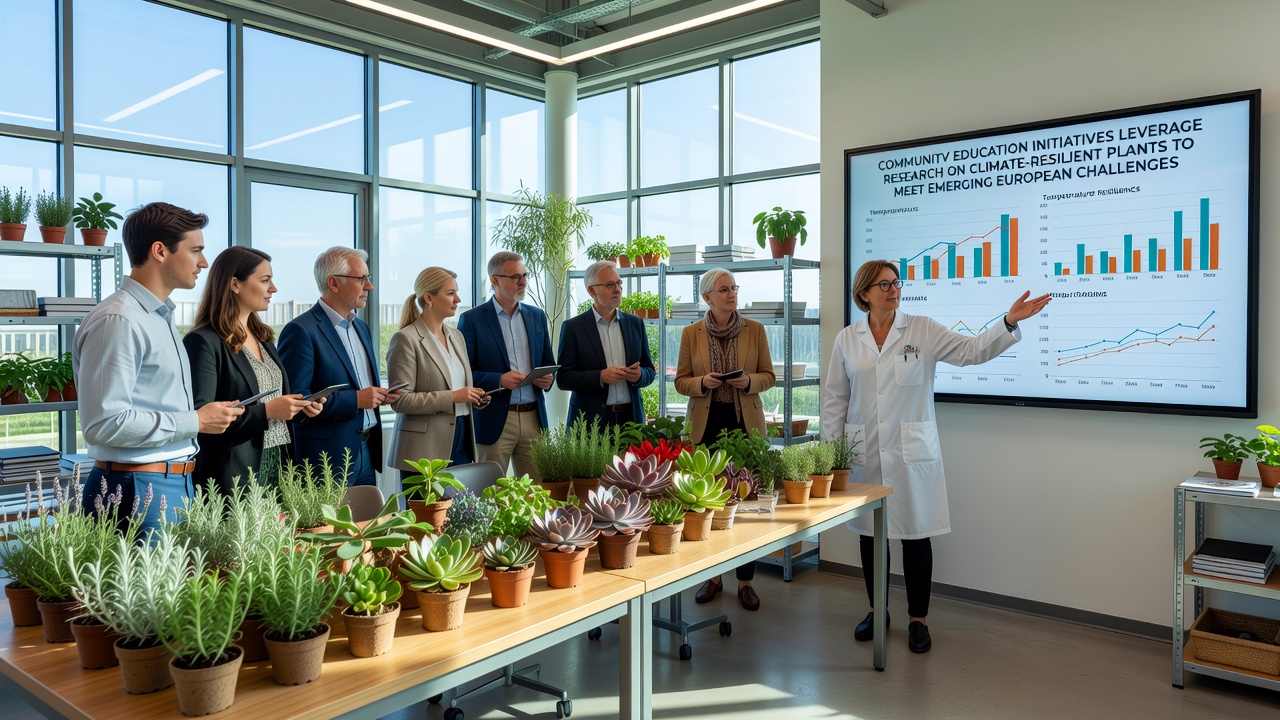
Training sessions held in community centers feature demonstrations of soil amendment practices that support the establishment of drought-tolerant ground covers, and instructors reference specific thresholds published in EU adaptation reports. These sessions also cover record-keeping formats that satisfy forthcoming audit standards, ensuring that volunteer-led plantings generate documentation usable by regional environmental offices.
Case Examples from Regional Programs
Projects in Spain and Portugal have combined botanical garden outreach with municipal adult education schedules, resulting in neighborhood mapping exercises that catalog existing vegetation and identify gaps where resilient species can be introduced. Data collected during these exercises align with monitoring protocols developed by EU-funded research consortia, allowing direct comparison across different climate zones.
Similar efforts in parts of central Europe incorporate citizen science apps that upload photos and growth observations to shared databases maintained by agricultural research institutes. The resulting datasets help refine planting calendars that account for shifting frost dates and precipitation patterns documented in continental climate models.
Resource Distribution and Knowledge Transfer
Seed banks affiliated with public universities now supply climate-resilient varieties to education hubs, accompanied by cultivation notes that reference performance metrics from multi-year trials. Instructors distribute these materials during seasonal events timed to coincide with planting windows recommended in the research literature, and follow-up visits collect feedback on establishment success under local conditions.
Partnerships with botanical societies have expanded the reach of these initiatives through joint field days where experts present findings on mycorrhizal associations that enhance drought resistance in selected grasses and perennials. Attendees receive handouts summarizing key statistics on water-use efficiency drawn from the same studies that underpin the European guidelines.
Conclusion
Community education structures continue to serve as the operational link between verified plant research and the requirements set out in emerging European environmental policies. By translating trial data into accessible training formats and compliance tools, these programs support measurable progress toward the targets scheduled for September 2026 and beyond. Ongoing data exchange between field participants and research institutions maintains the accuracy of recommendations while satisfying documentation needs for regulatory reporting.