Vera Sullivan · 11 September 2026
Alpine Plant Discoveries Fuel Digital Archive Growth Alongside Artisan Textile Experiments
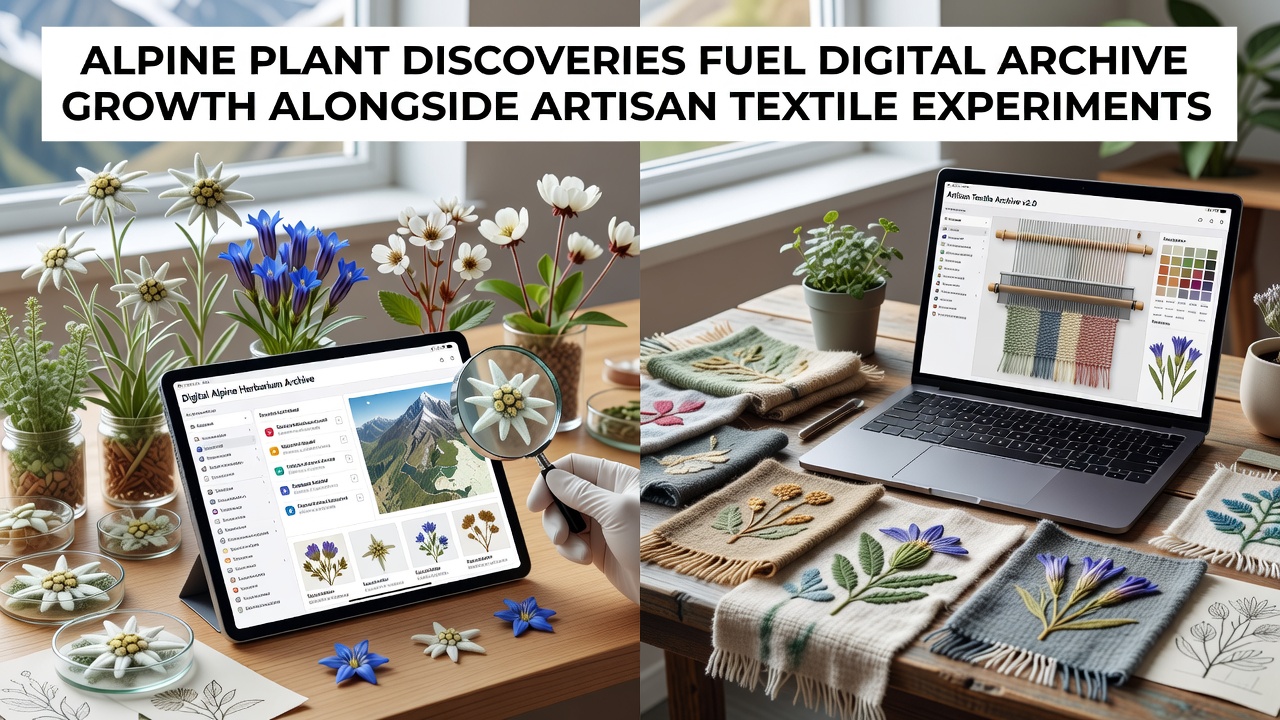
Recent expeditions in the European Alps have identified several previously undocumented plant species, and these findings have accelerated efforts to expand digital archives that catalog biodiversity data across mountain ecosystems. Researchers from multiple institutions have documented the new species during fieldwork conducted through the summer of 2026, with additional surveys planned for September 2026 to capture seasonal variations in growth patterns and habitat conditions.
New Species Identified in High-Altitude Zones
Botanists working in the Swiss and Italian Alps located three distinct plant varieties that exhibit adaptations to extreme cold and short growing seasons, according to reports from the Swiss Federal Institute for Forest, Snow and Landscape Research. These discoveries add to existing records of alpine flora, which already include over 4,500 vascular plant species across the region. Field teams collected specimens, soil samples, and photographic evidence that now feed directly into centralized databases managed by European research networks.
Data from the expeditions show that two of the newly identified plants demonstrate unusual resistance to temperature fluctuations, a trait that could inform studies on climate resilience. Observers note that such findings emerge regularly as monitoring technologies improve, yet the scale of digitization for these records has increased notably in recent years. Archives now incorporate high-resolution scans, genetic sequences, and geospatial mapping that allow remote access for scientists worldwide.
Expansion of Digital Biodiversity Repositories
Digital archive platforms have grown in both volume and functionality because of these alpine discoveries, with institutions adding thousands of new entries since early 2025. The integration of machine learning tools has streamlined the process of cross-referencing new plant data against historical collections, reducing duplication and highlighting gaps in coverage. European Union-funded projects have supported much of this infrastructure, while parallel efforts in North America draw on similar methodologies through the National Science Foundation.
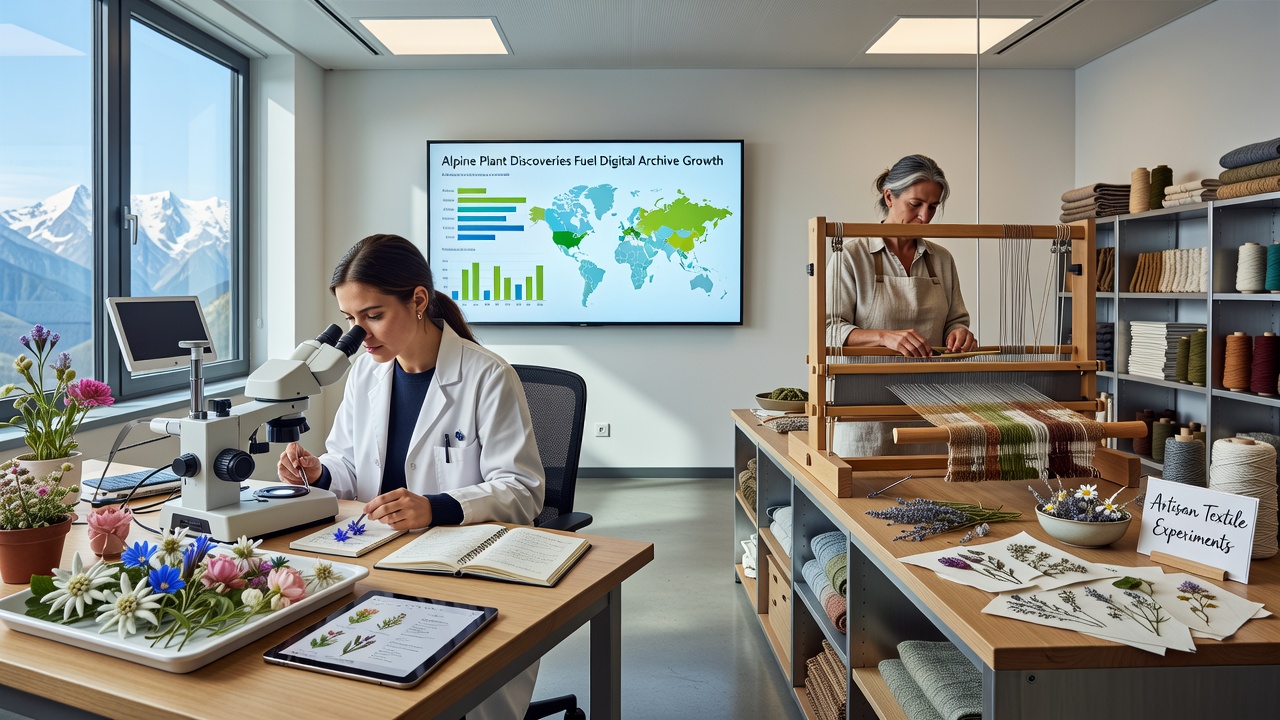
Access statistics reveal a steady rise in queries from textile researchers and designers who seek inspiration from documented plant structures and pigments. These archives now include detailed metadata on fiber properties and natural dye potential, categories that bridge scientific records with applied creative work. Updates scheduled for September 2026 will incorporate real-time sensor data from alpine monitoring stations, further enriching the datasets available to users.
Artisan Textile Experiments Draw on Plant Data
Textile artisans have begun incorporating elements from the newly archived alpine plants into their experimental collections, using both direct fiber extraction and pattern motifs derived from leaf and stem structures. Workshops in northern Italy and the Austrian Tyrol have tested dyeing techniques based on pigment profiles stored in the digital repositories, producing colorfast results that withstand repeated washing. One collaborative project between a Swiss archive and a Canadian craft collective has generated sample fabrics that combine traditional weaving methods with data-driven color palettes.
These experiments operate alongside ongoing scientific documentation rather than in isolation, because the same digital tools that support biodiversity tracking also supply precise measurements for material testing. Artisans report that the availability of open-access imagery and chemical composition data has shortened development cycles for new textile lines. European textile associations have tracked participation in related training programs, noting increased enrollment from professionals who previously worked exclusively with synthetic materials.
Intersections Between Research and Craft
Shared digital platforms now host both raw scientific data and processed design resources, creating pathways where discoveries in one domain inform practices in another. For instance, genetic information on plant resilience has guided selection of dye plants that maintain vibrancy under varying light conditions, a detail useful for outdoor textile applications. Conferences scheduled for late 2026 will examine these overlaps through joint presentations by botanists and textile specialists.
Funding streams from government and private sources have supported the parallel growth of archives and experimental studios, with several grants explicitly requiring cross-sector collaboration. Metrics compiled by research institutions indicate that archive downloads in textile-related categories rose by 28 percent between 2024 and 2026, reflecting broader interest in nature-derived materials.
Conclusion
Alpine plant discoveries continue to supply both new biological information and creative prompts that sustain digital archive expansion and textile experimentation. As September 2026 approaches, additional fieldwork and archive updates will likely extend these connections, maintaining the flow of data between scientific records and applied design work. The infrastructure built around these activities provides a durable framework for future contributions from multiple disciplines.